


Why Your Medicare Premiums May Be Based on Income You No Longer Earn
Many people think of Medicare premiums as a fairly predictable expense in retirement. But what you pay depends in part on your income, which can change significantly when you stop working.
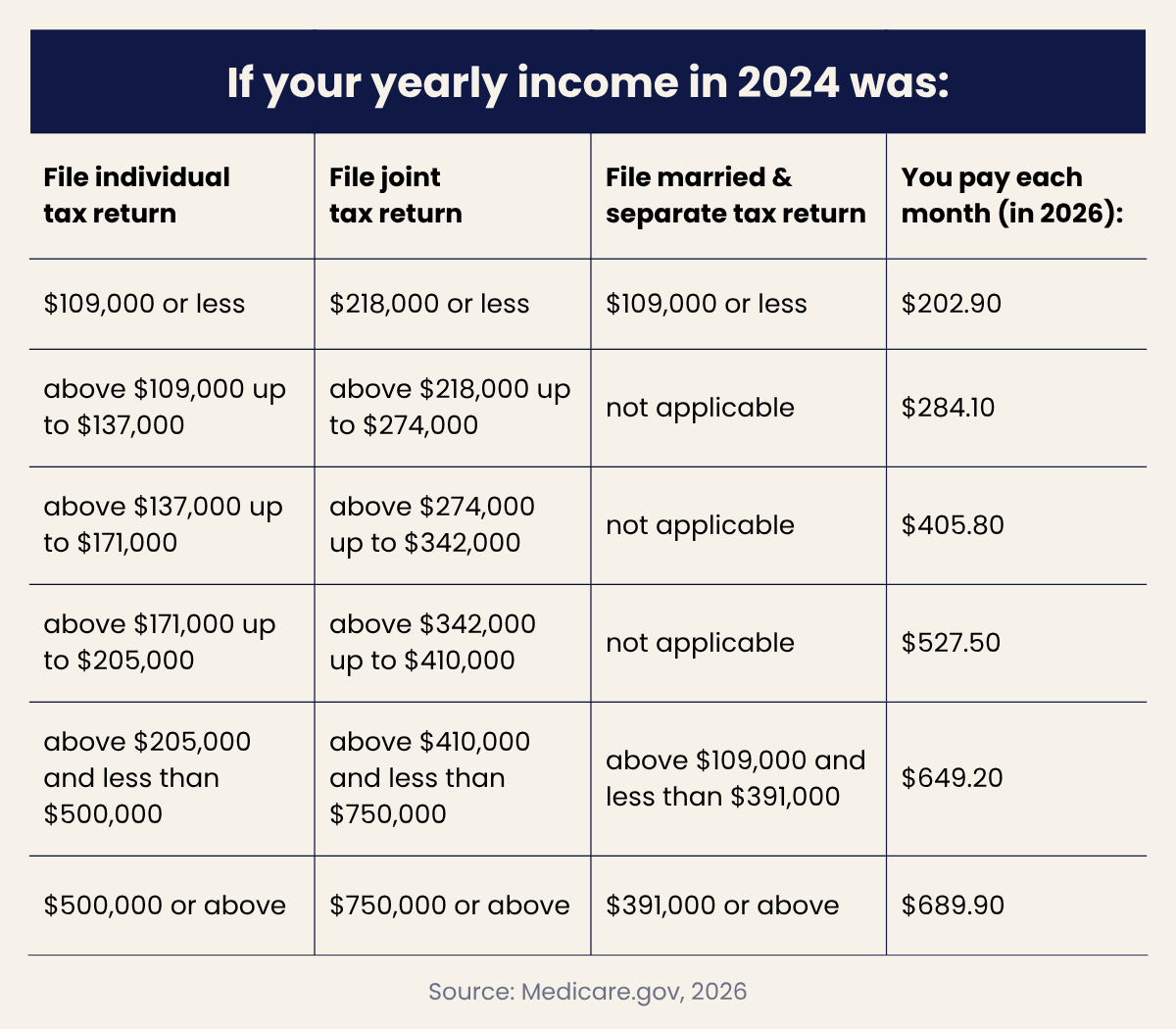
The standard Medicare Part B premium for 2026 is $202.90 per month, an increase of $17.90 from 2025. Higher-income retirees pay an additional surcharge called the Income-Related Monthly Adjustment Amount (IRMAA).¹
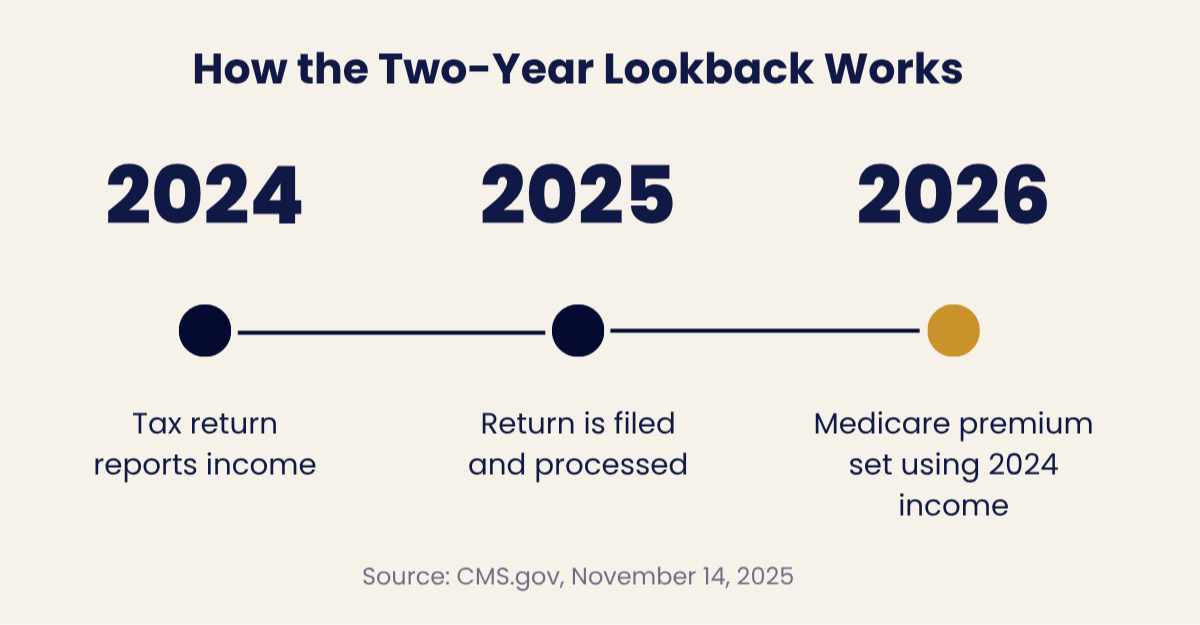
The complication is that IRMAA is based on income from two years earlier. That means your 2026 premiums are generally based on your 2024 tax return.² If you've recently retired, you could be paying higher Medicare premiums based on a salary you're no longer earning.
Why Can Just $1 of Additional Income Increase Your Medicare Premiums?
IRMAA works differently from income tax brackets. With income taxes, moving into a higher bracket only increases the tax rate on income above that threshold. With IRMAA, crossing an income threshold by even $1 triggers the full surcharge for that tier.
For example, in 2026, a single filer with modified adjusted gross income (MAGI) of $109,001 instead of $109,000 would pay approximately $1,148 more in annual Medicare Part B and Part D premiums.³
For a married couple filing jointly, where both spouses are enrolled in Medicare, crossing the $218,000 threshold by just $1 could increase their combined annual premiums by approximately $2,297.³
What If Your Income Has Dropped Since Retirement?
Social Security recognizes that income can change significantly around retirement.
If you've experienced a qualifying life-changing event, you can submit Form SSA-44 to request that your IRMAA surcharge be recalculated using more recent income rather than the tax return from two years earlier.²
Social Security recognizes eight qualifying life-changing events:
Marriage
Divorce or annulment
Death of a spouse
Work stoppage, including retirement
Work reduction, such as moving from full-time to part-time work
Loss of income-producing property due to circumstances beyond your control
Loss or reduction of certain pension income
Receipt of an employer settlement payment related to bankruptcy or reorganization
A decline in income alone does not necessarily qualify. The change generally must be associated with one of these recognized events.
How Do You Request a Medicare Premium Adjustment?
If your income has dropped because of a qualifying life-changing event, you can complete Form SSA-44 and submit it to Social Security.
The form asks you to identify the life-changing event, provide the date it occurred, and report your reduced or estimated income. You may also need to provide supporting documentation.
You can submit the form by mail or fax, or through a local Social Security office.
If your request is approved, Social Security will adjust your IRMAA determination. Any resulting overpayments can be refunded or credited.3
Frequently Asked Questions
How long does Social Security take to process an SSA-44 request?
Social Security typically takes six to eight weeks to process an SSA-44 request. During that time, Medicare premiums generally remain unchanged. If the request is approved, any overpayments will be refunded or credited.
What if my income dropped for a reason that isn't a qualifying life-changing event?
Form SSA-44 generally would not apply.
Does filing Form SSA-44 lower my Medicare premiums permanently?
Not necessarily. Whether a lower surcharge continues will depend on your income and the applicable thresholds in future years.
The Takeaway
Medicare premiums don't always reflect your current financial situation, particularly in the first few years of retirement. If your income has dropped because of a qualifying life event, you may be able to request an adjustment rather than waiting for the two-year lookback to catch up.
1 CMS.gov, November 14, 2025.
2 SSA.gov, 2026.
3 Medicare.gov, 2026.